Baja SAE — Drivetrain
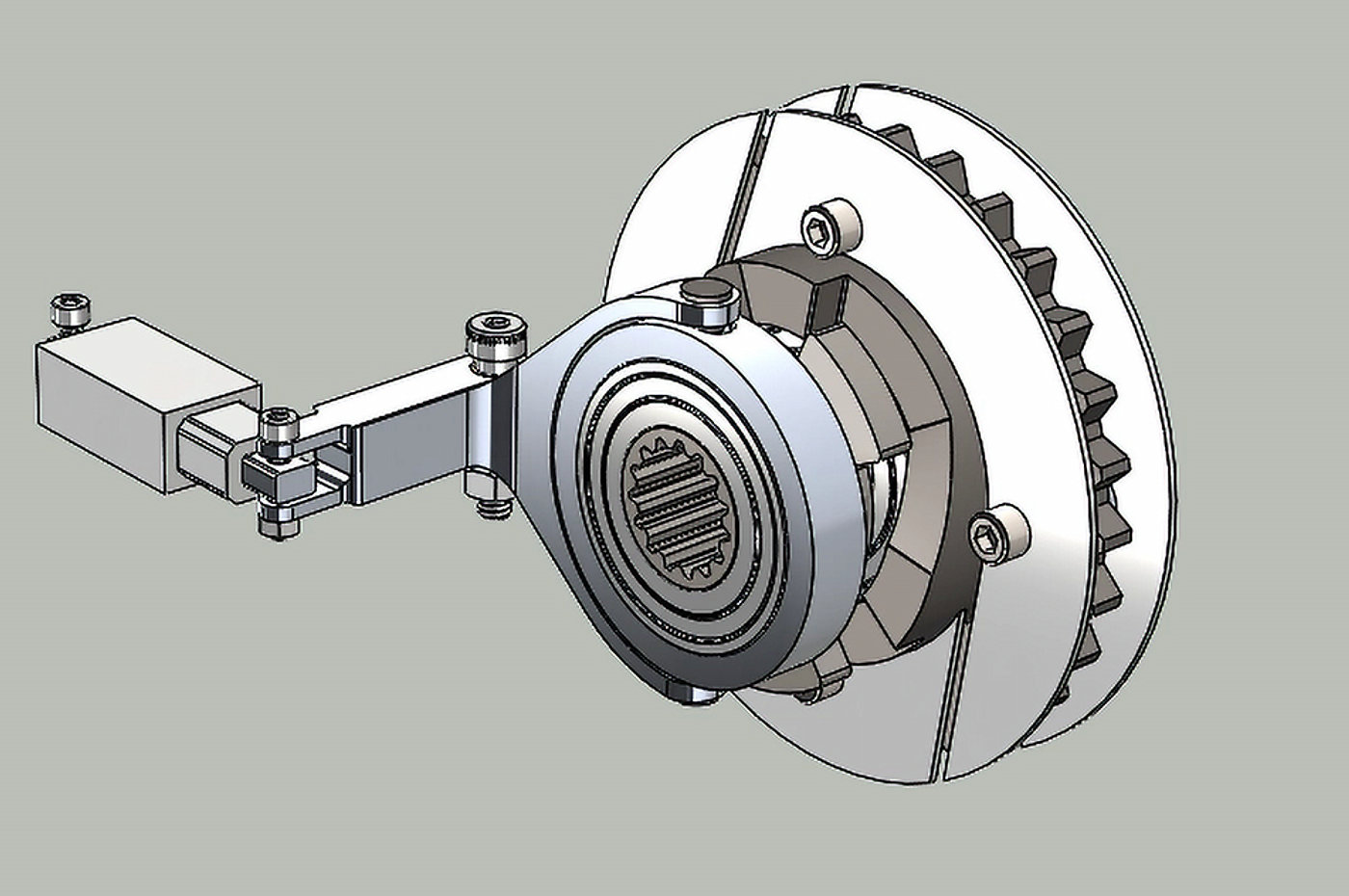
For the 2024–2025 GW Baja SAE car, I designed and machined a dog clutch that lets us shift between 2WD and 4WD without stopping to pull the chain. The goal was to fit into the existing drivetrain layout without redesigning anything around it.
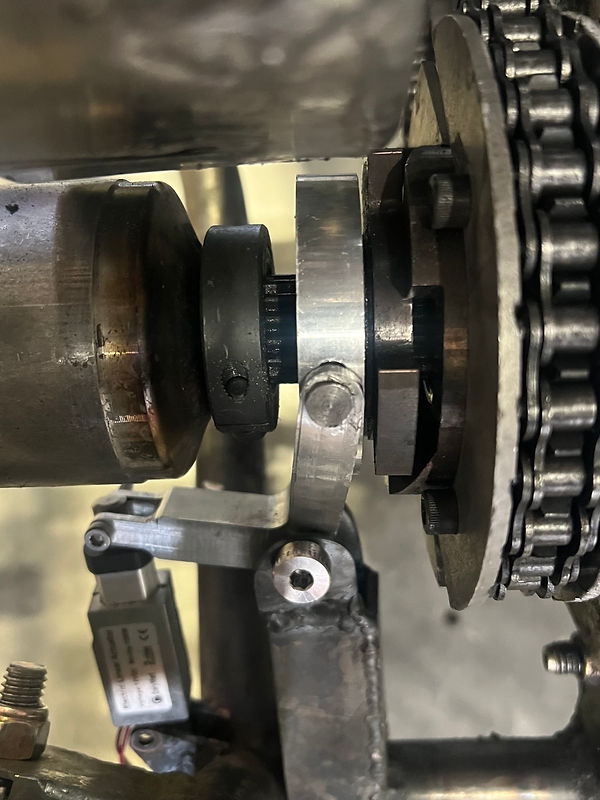
The clutch had to drop into the existing gearbox layout without changing anything around it. Three-dog geometry for even load distribution and low backlash. The fork rides on a bearing and custom slider so it can actuate the dogs while the clutch is spinning. The starboard piece was welded to the COTS sprocket — we couldn't cut a custom one in-house.
Actuation was originally planned via a linear actuator — easier to reach in the tight layout — but we switched to manual after engagement issues in testing (see §04).
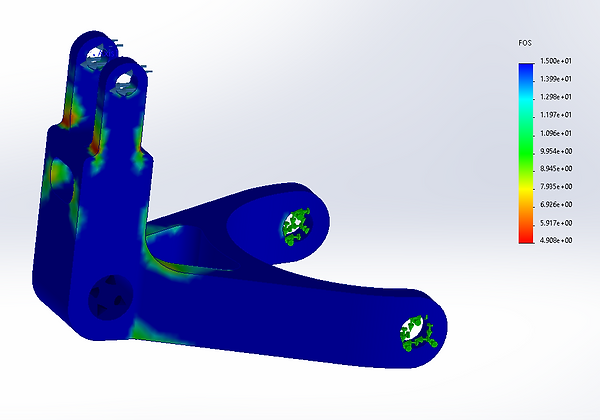
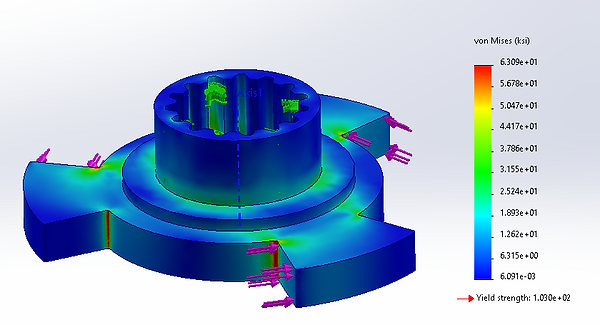
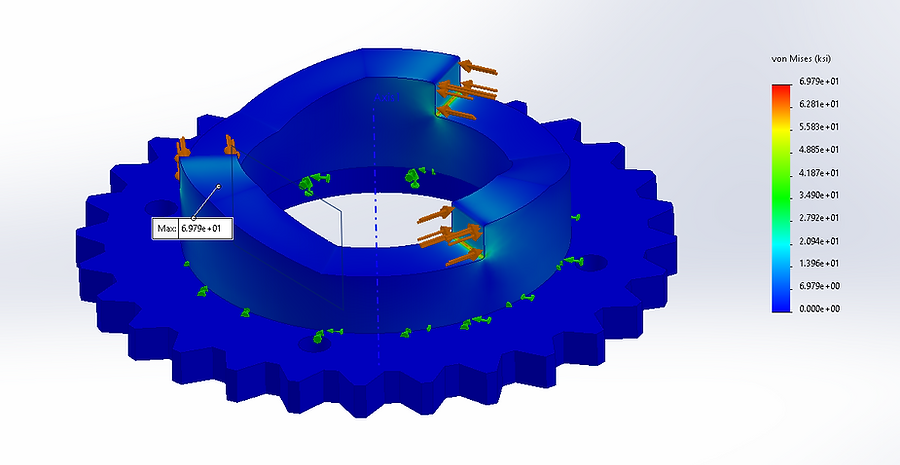
FEA validated strength under peak torque — contact stresses at the dog interfaces, fillet transitions, and shaft engagement features. Safety margins were sufficient, deformation minimal. Dog geometry and engagement depth were iterated to balance torque capacity with clean engagement.
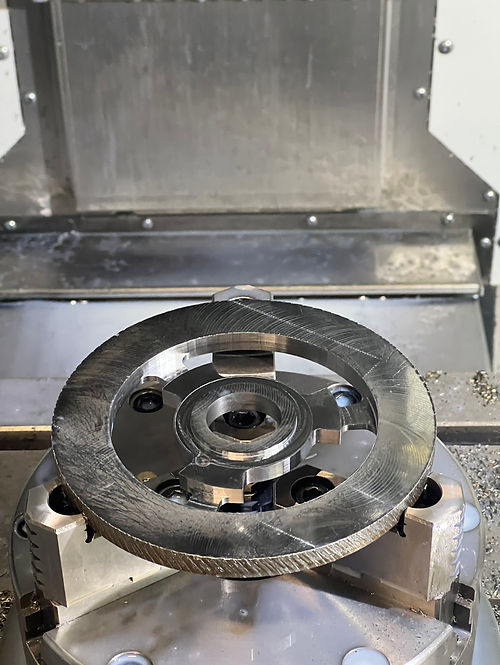
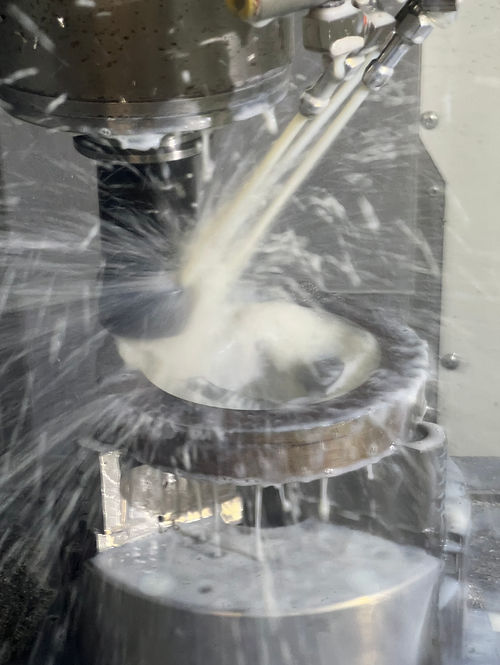
Everything CNC machined from 4340 steel — same as the gearbox gears. Our wire EDM was down, so all features were designed around what the CNC could hold: port dogs, starboard dogs, fork, port slider, and fork pins.
The starboard piece was welded to the COTS sprocket since we couldn't cut a custom one. Critical interfaces were held to tight tolerances so the fork could move without binding while the clutch spun. The whole assembly bolted straight into the existing drivetrain mounts.
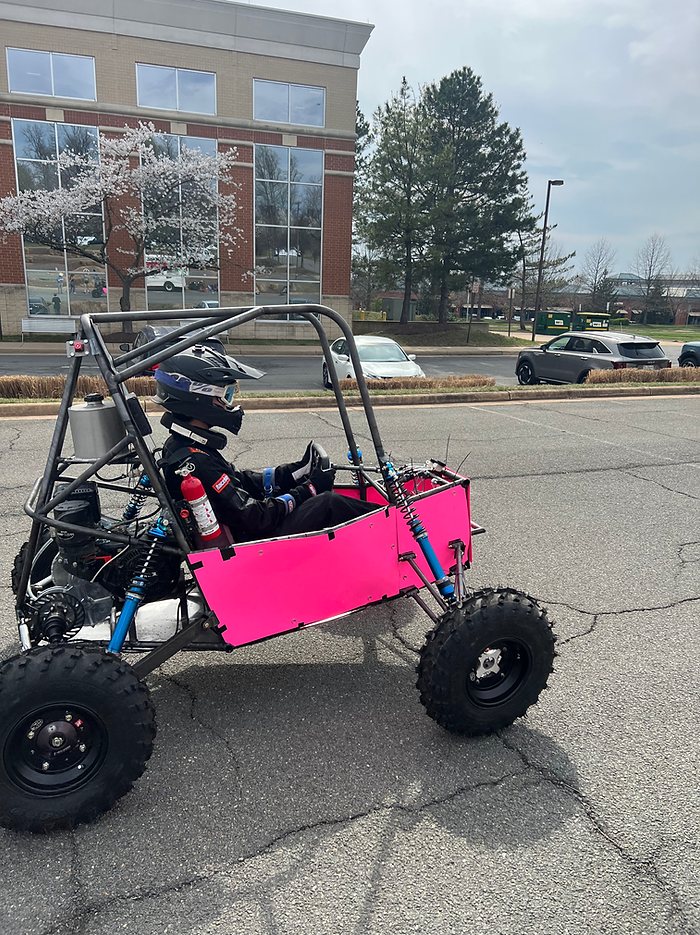
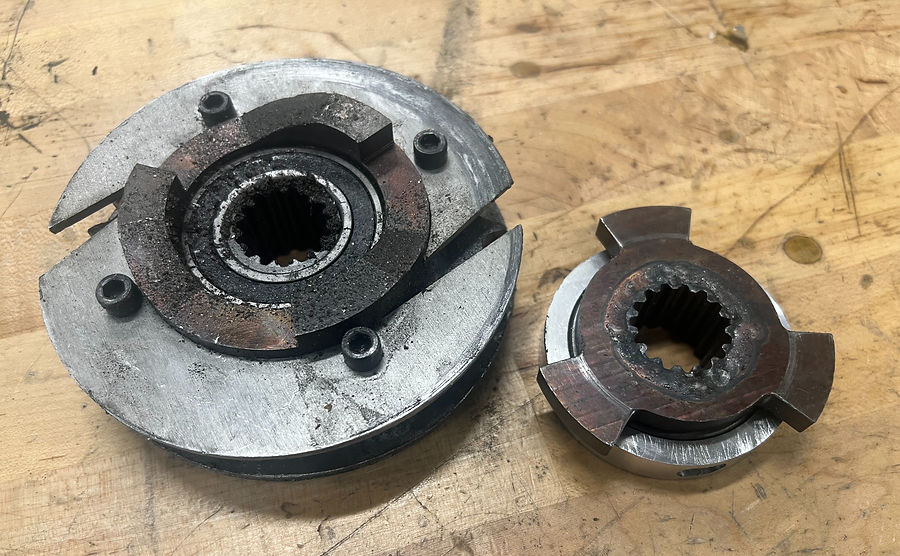
In corners, the clutch was back-driving itself — front wheels spin faster than the rear through differential action, and the resulting force was enough to kick out the linear actuator and bend the clutch tabs.
We looked at adding a spring to hold it engaged, but couldn't fit one with the actuator in place. The fix was switching to manual actuation: a spring the driver inserts by hand. That solved it.
Explore the CAD model in 3D — rotate, pan, and zoom.