Baja SAE — Drivetrain
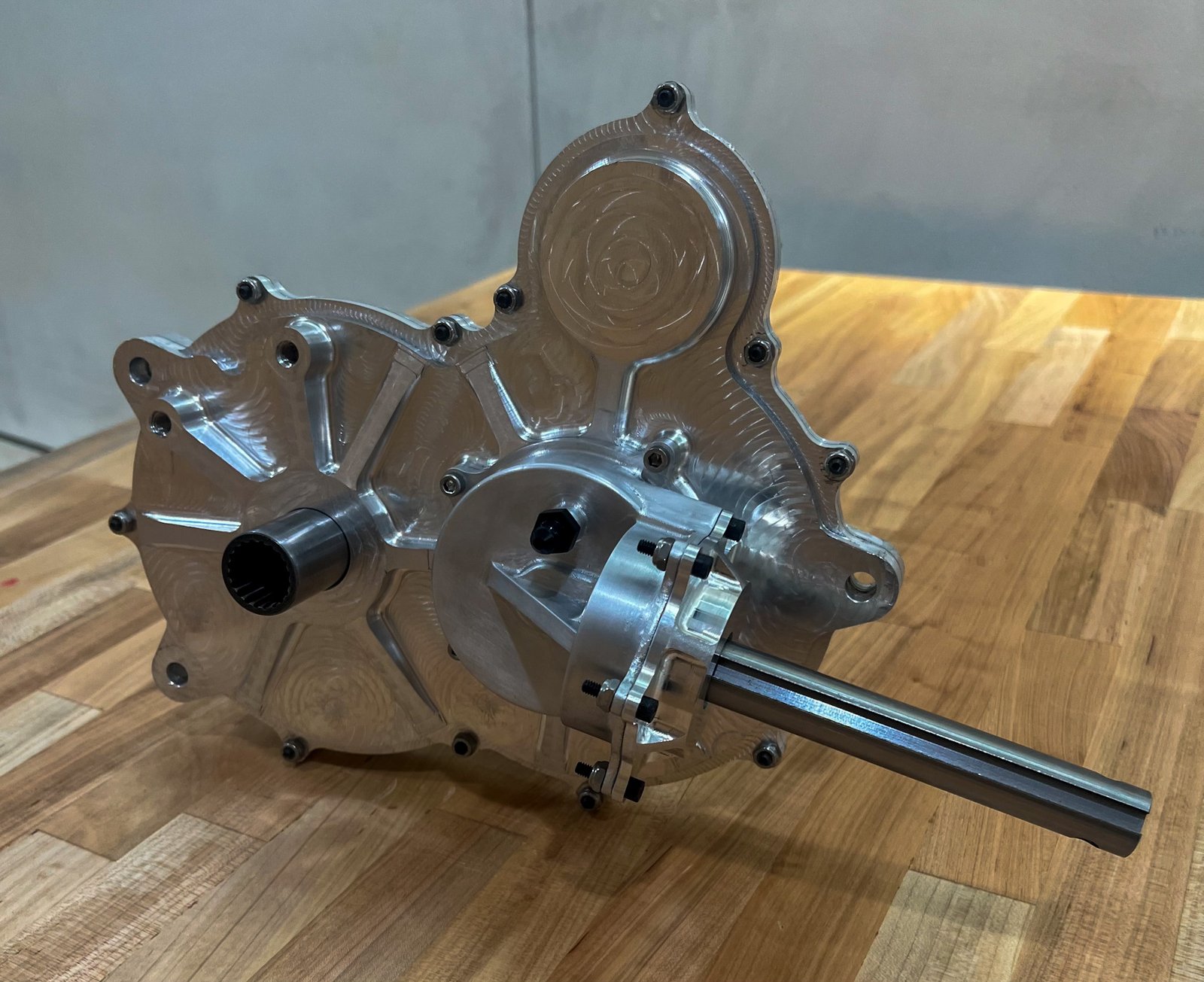
For the 2025–2026 GW Baja SAE car, I redesigned the 4WD power-transfer system as drivetrain lead. The original setup used a chain drive with a dog clutch for 2WD/4WD engagement — the clutch was a recurring reliability problem and required manual operation. The new design uses a prop shaft and a COTS overrunning front differential, which disengages the front axle automatically. The clutch is gone entirely. At the heart of the system is a new rear reduction gearbox that turns power 90° to drive the prop shaft.
The chain system tied the front and rear axles together rigidly — any speed difference in corners caused binding, which is what the dog clutch was managing. Switching to a prop shaft with an overrunning (one-way) differential at the front axle removes that constraint. The front wheels freewheel when they spin faster than the rear, and lock in when torque is needed. No driver input required.
Gear ratios were optimized around the overrunning differential's torque spec and the vehicle's target acceleration profile. Packaging the prop shaft through the chassis required coordinating with the frame and suspension teams to avoid conflicts with existing hard points.
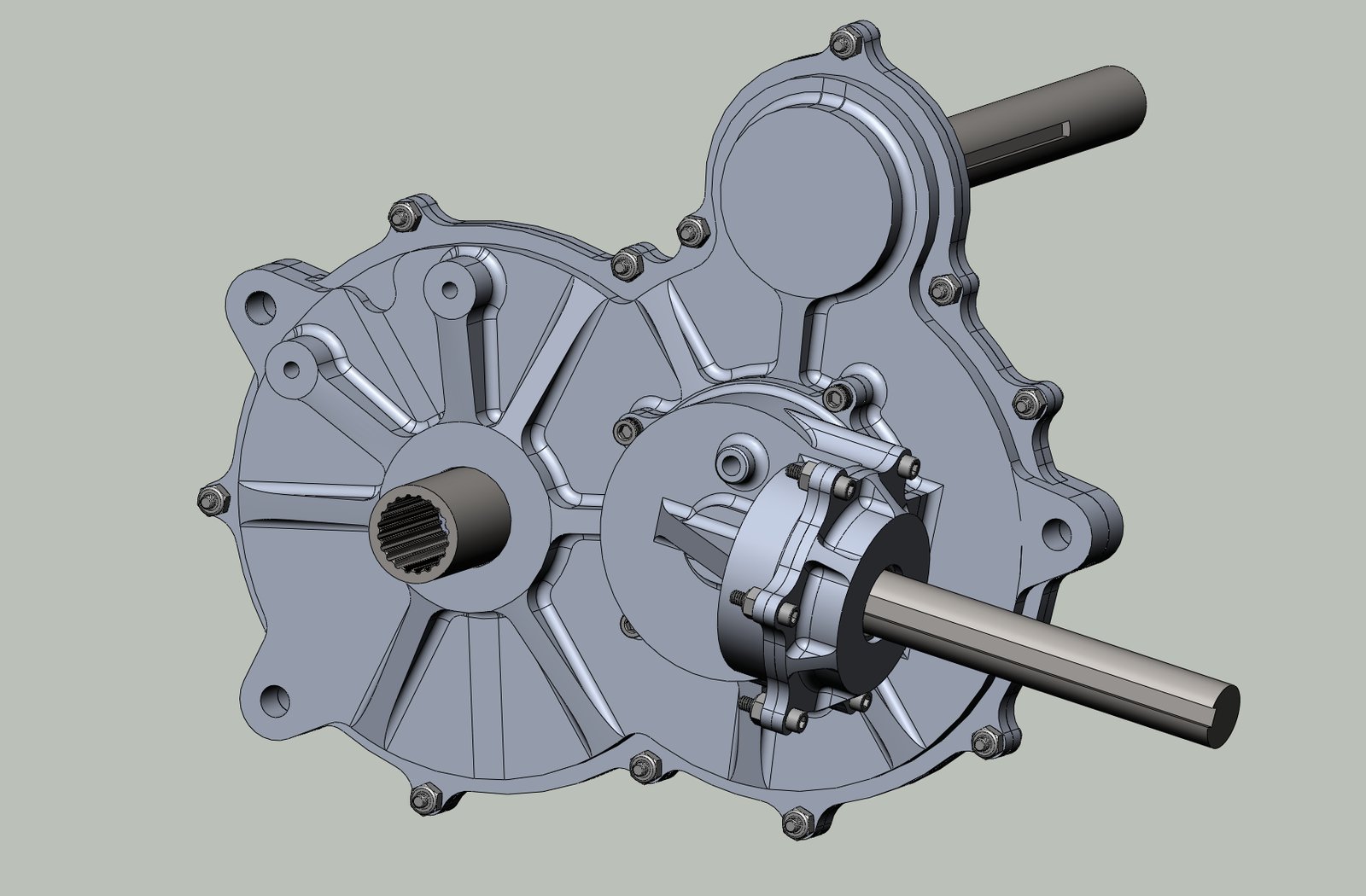
The rear gearbox is where the 90° turn happens. It's built around custom helical bevel gears — bevel gears because the tooth direction requirements of a 90° power transfer demand them, and helical because the tooth geometry opened up strength-to-weight optimization that straight-cut teeth couldn't match.
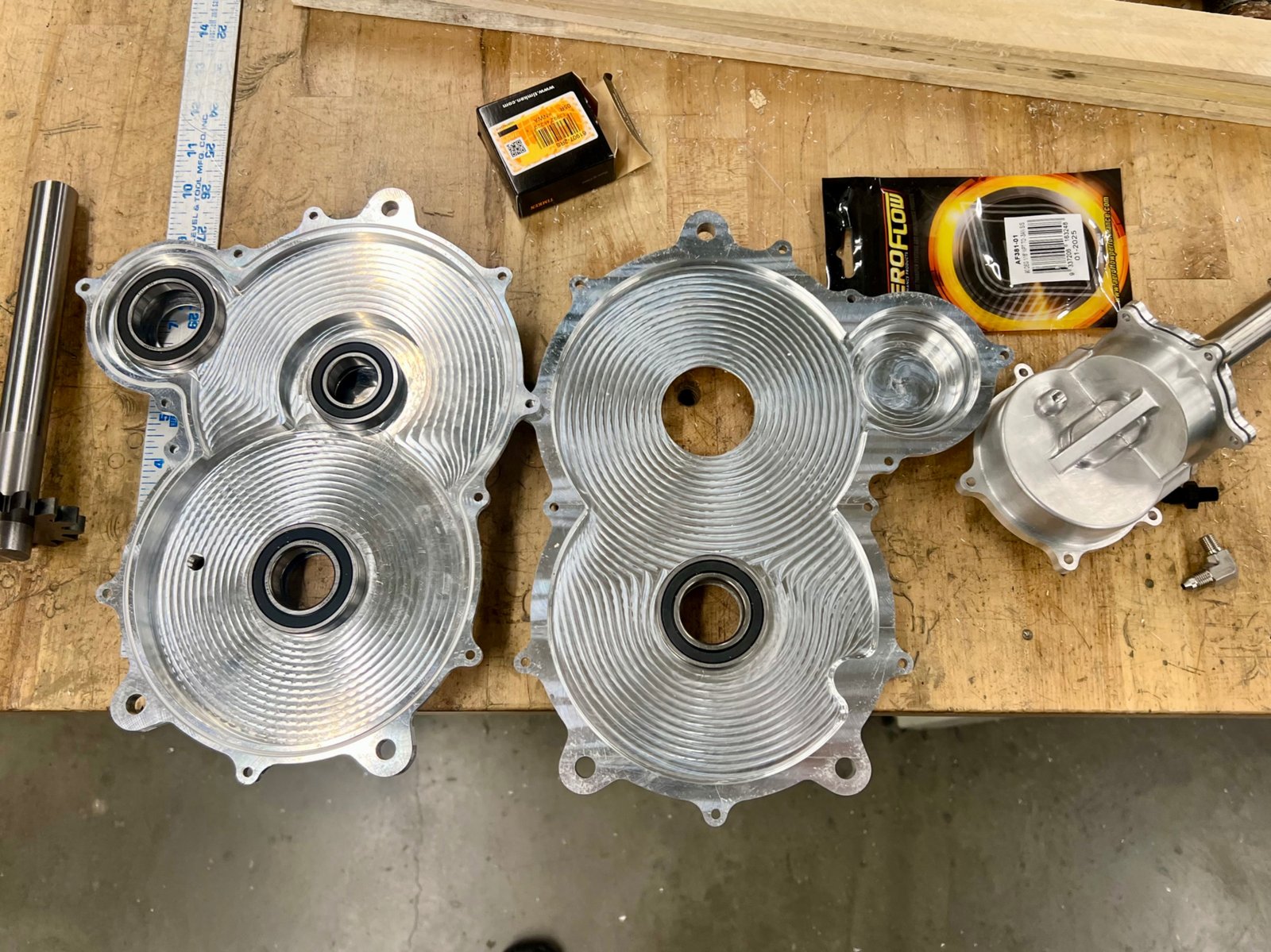
The housing does more than hold gears: brake caliper mounts and CV joint interfaces are integrated directly into it, so those loads feed into the gearbox structure instead of separate brackets. The input angle was adjusted to give the CV joints the clearance they need through full suspension travel.
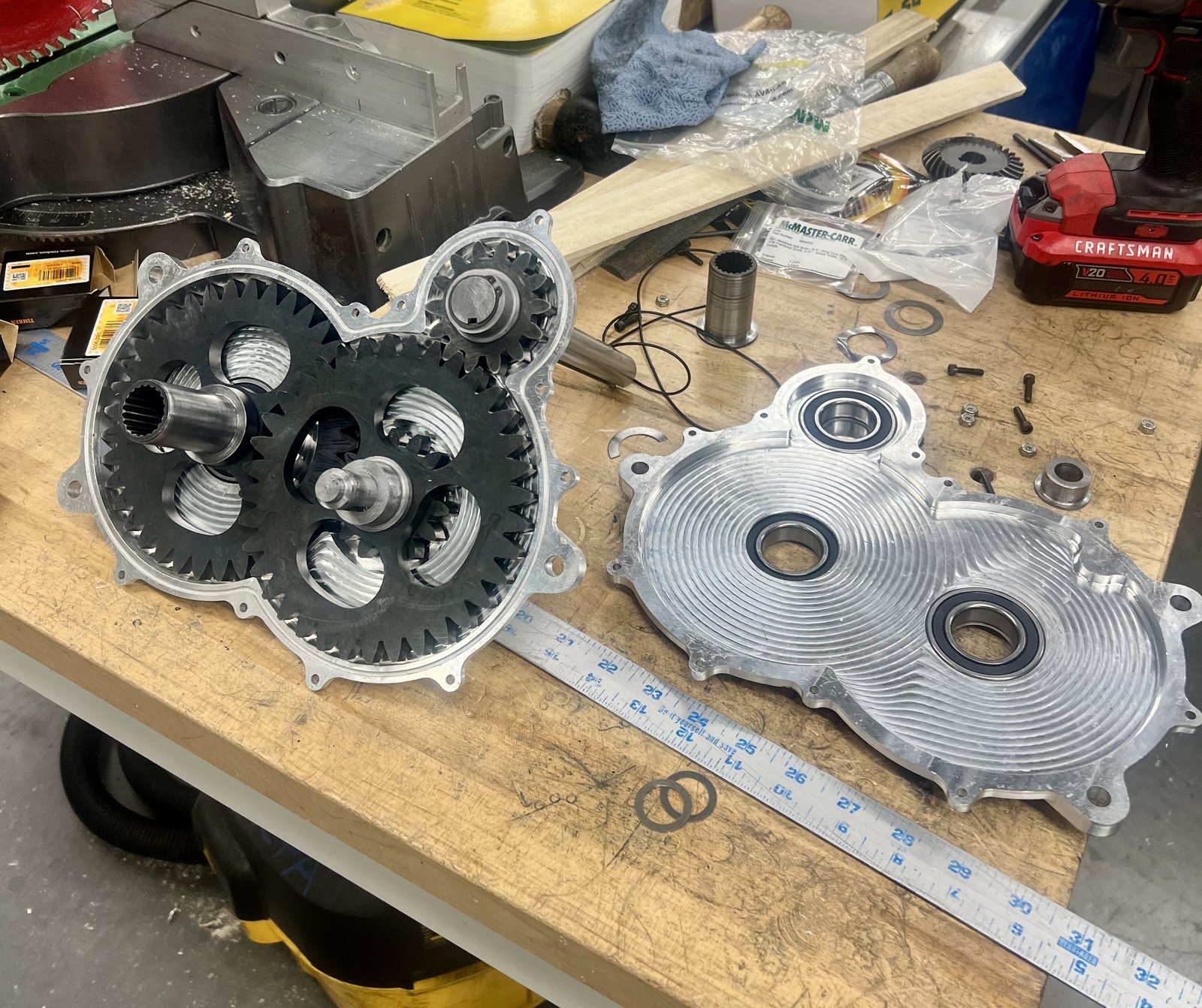
Gear parameters were tuned using tensile testing data rather than handbook values — testing gave actual material strength numbers for the specific stock we were running, which let us optimize more aggressively. Result was a 26% reduction in MOI while holding FOS at 1.5. Lower MOI means faster acceleration response from the drivetrain.
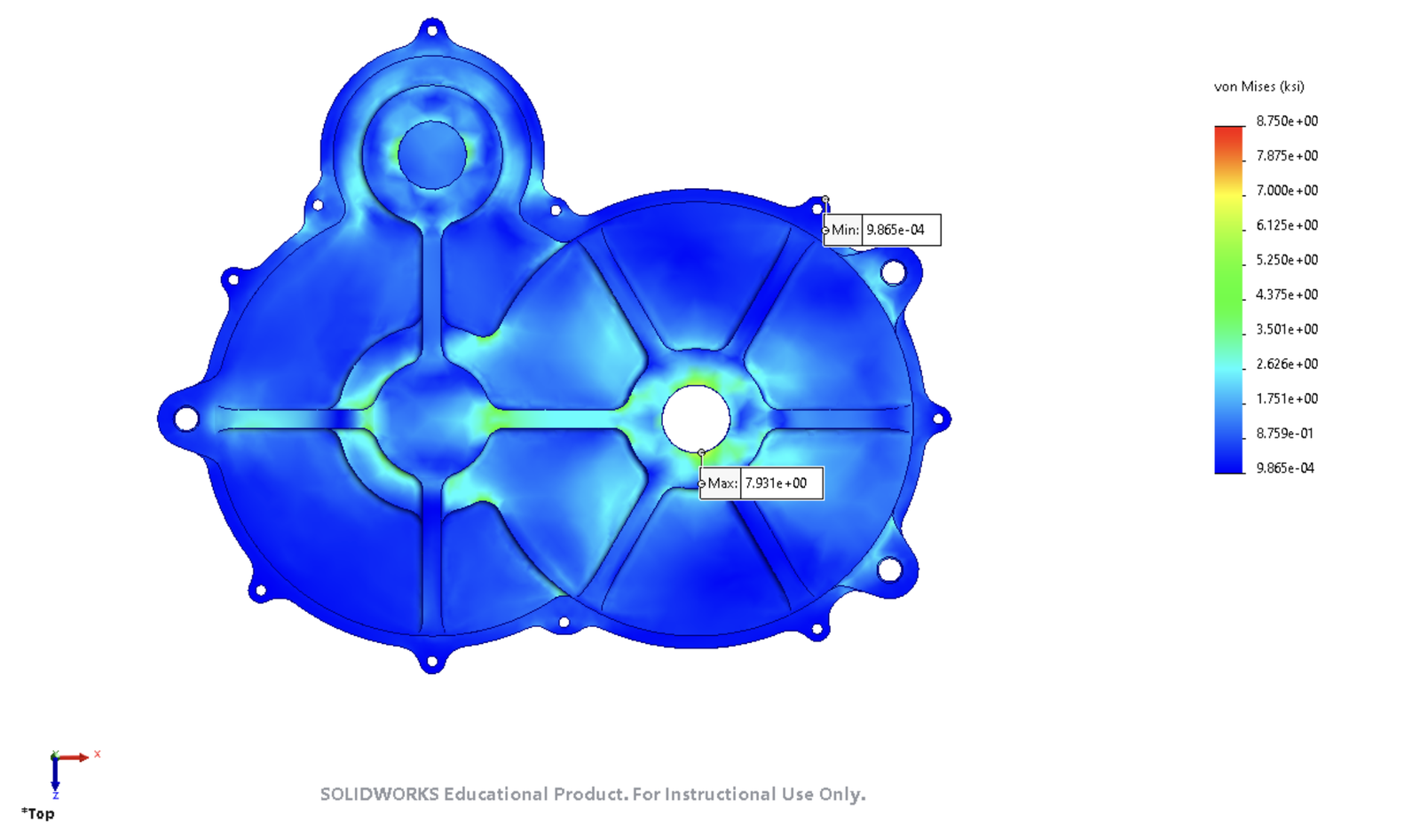
The gearbox itself was sized with hand calculations first — torque transfer through the gear train, gear tooth loading, and bearing life — then FEA confirmed the details: gear contact stresses, shaft and housing deflection, and the stress concentrations around the mounting regions where the caliper and CV loads enter the housing.
Prop shaft components were sourced and modified in-house. The differential was COTS with custom mounting adapted to the front subframe. The gearbox gears were wire-EDM cut from 4340 steel; the input, intermediate, and front output shafts are COTS, while the rear output shaft is fully custom. Assembly and fitment testing done on the car ahead of competition.
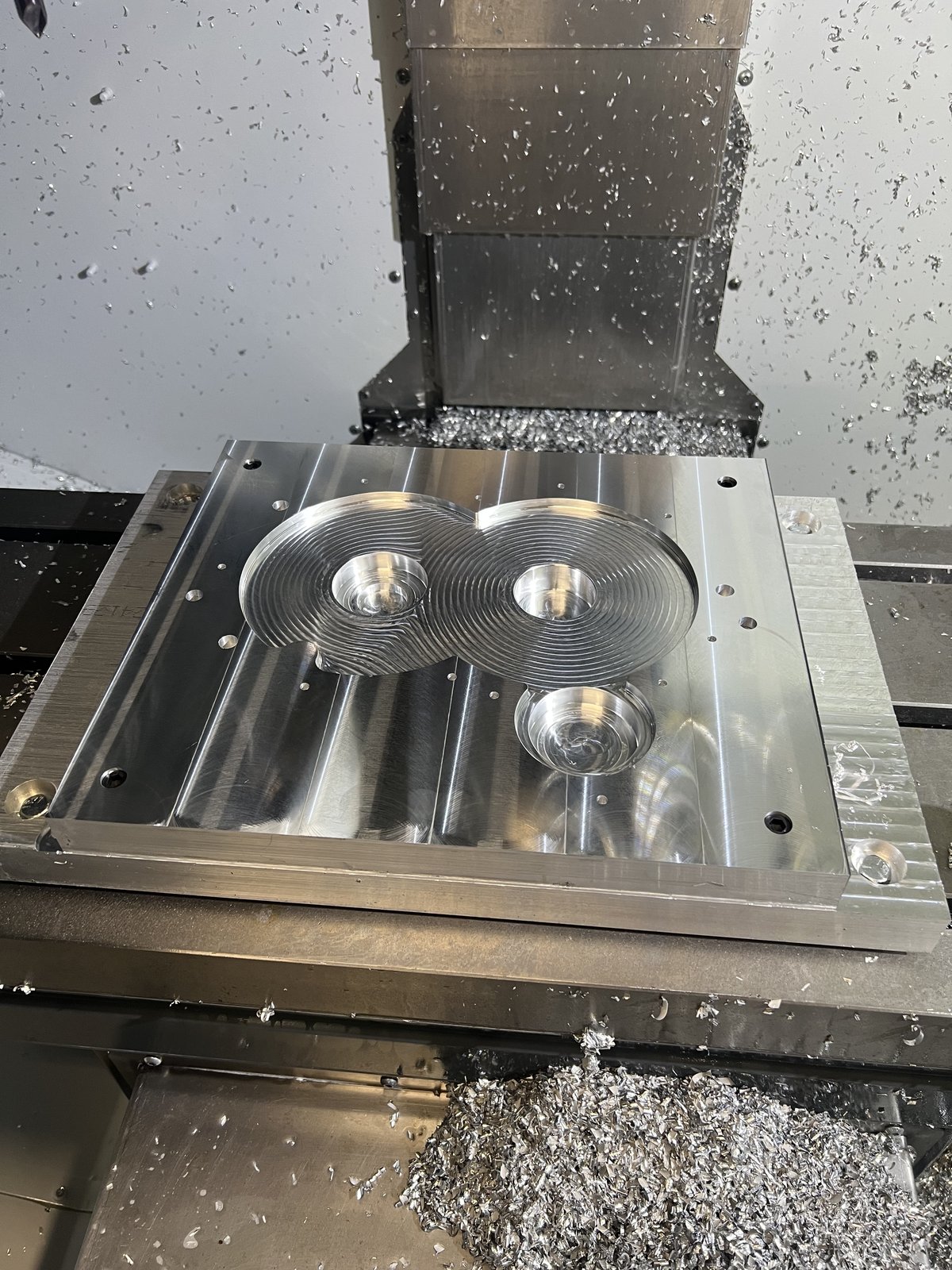
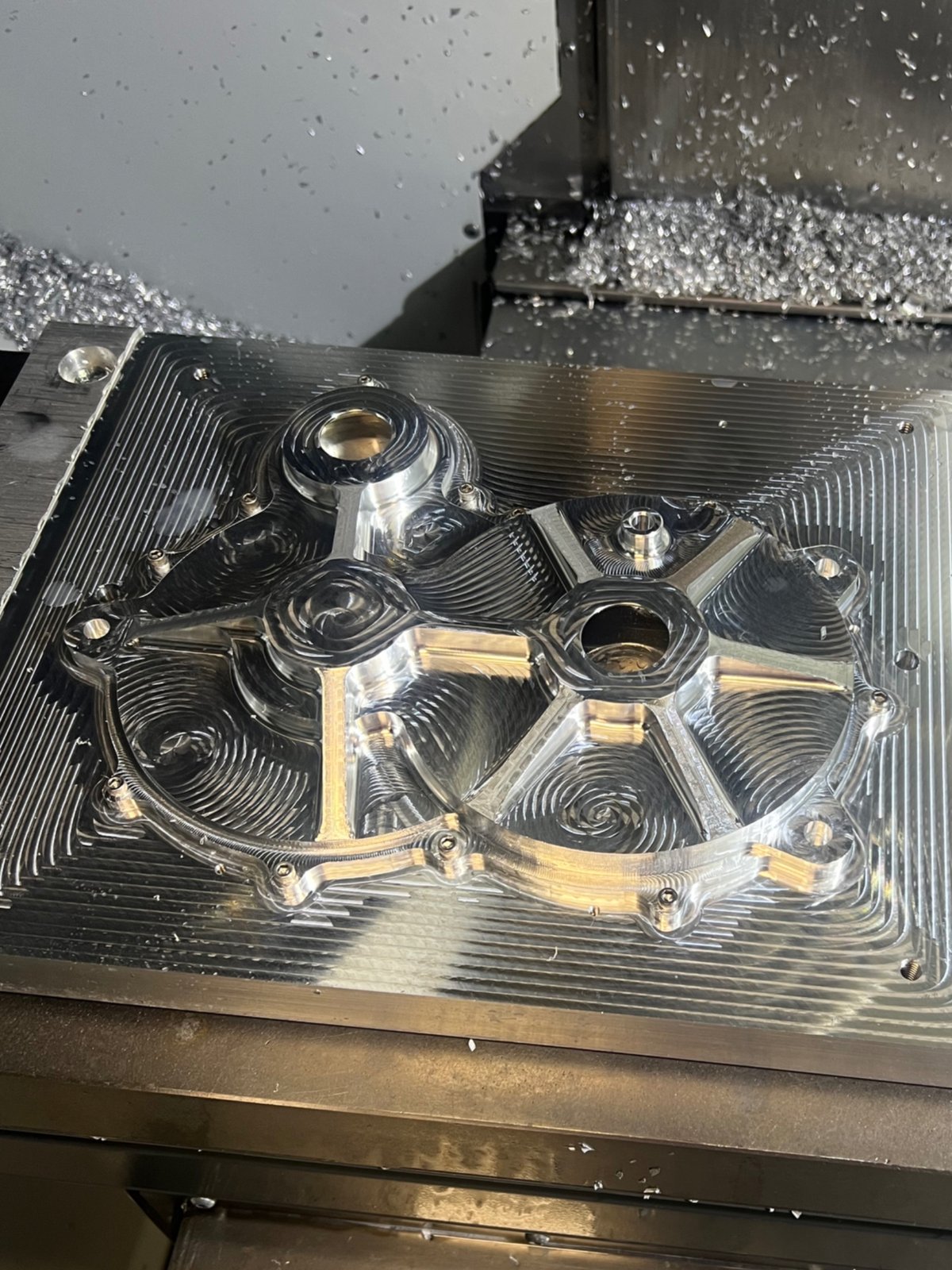
The housing was CNC machined in-house from 6061-T6, with an O-ring groove sealing the two halves. The machining lesson from the previous gearbox — where vise-held fixturing flexed enough to scrap parts — carried straight into this one: a custom fixture bolted directly to the machine bed held the accuracy needed for the bearing bores and mating faces on the first attempt.
Explore the CAD model in 3D — rotate, pan, and zoom.