Side Project — Drivetrain
A side project I ran alongside Baja SAE drivetrain work. The CVT the car uses requires regular tuning and doesn't give the driver direct control over power delivery. I wanted to explore whether a compact sequential transmission could be a viable alternative — one that would deliver rapid, positive gear changes while handling the torque demands of an off-road vehicle, without the tuning overhead of a CVT.
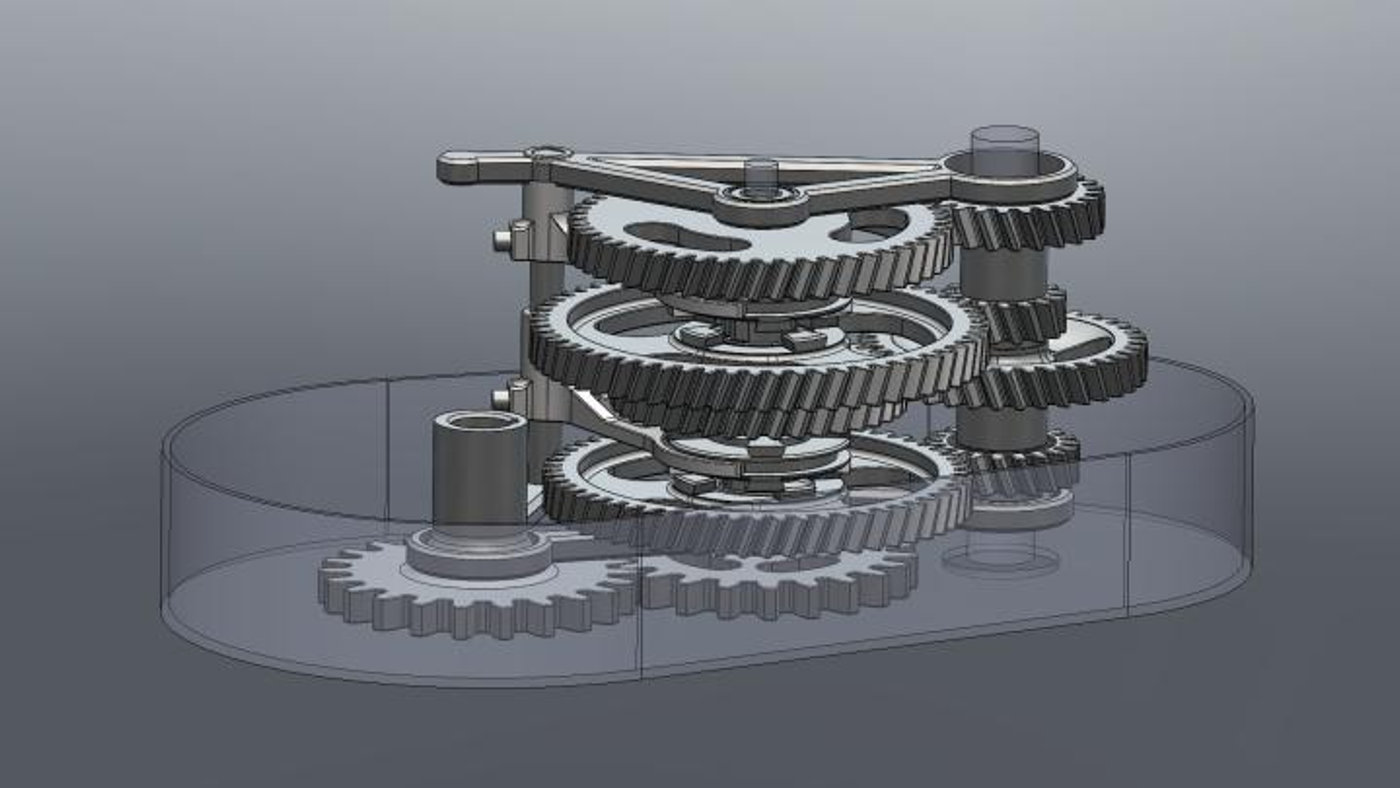
The transmission uses a constant-mesh gear arrangement with a drum-and-fork shifting mechanism. The shift drum rotates to drive a fork, which slides the engagement dogs between gears in a strict sequence — you can only step up or down one gear at a time, which prevents mis-shifts. That architecture eliminates CVT tuning and gives the driver a positive, predictable shift feel.
The main design challenges were the drum cam profile and the fork geometry. The cam path has to move the fork far enough to fully seat the dogs without over-travel, and do it fast enough that the shift happens in a single drum rotation. Fork geometry was sized around that travel and the available packaging space within the existing drivetrain constraints.
At this stage the analysis was about motion and alignment rather than power transmission. I ran CAD kinematic checks on gear spacing, fork travel distance, and shift sequencing to confirm that each gear fully engages before the next shift can begin — no possibility of being caught between gears. That process drove the final form of the drum cam path and the engagement dog geometry, particularly the chamfer angles that guide the dogs into mesh.
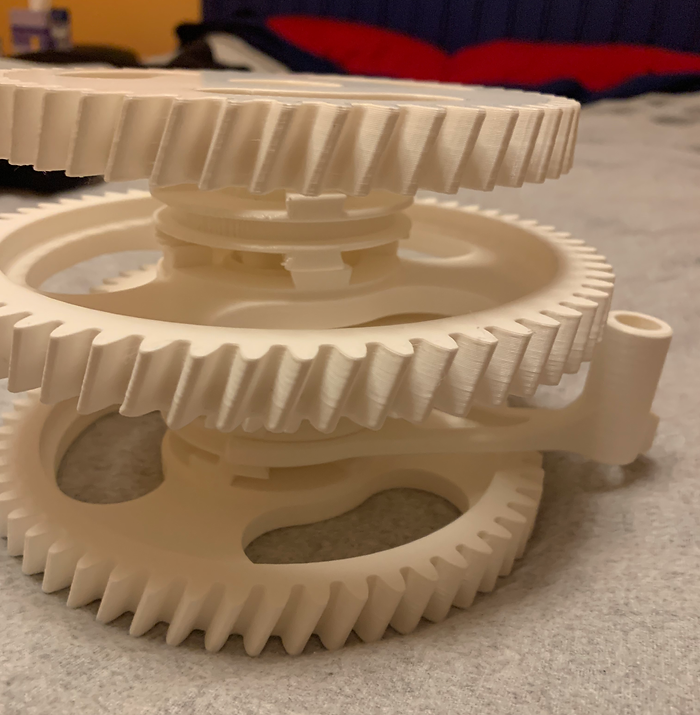
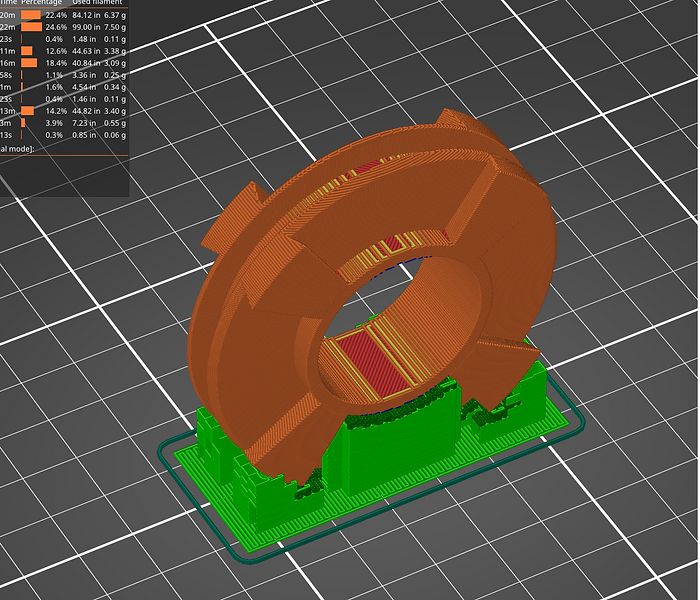
I 3D printed the full-scale housing and assembled it with steel shafts, engagement dogs, and real bearings. Working through the shift motion physically surfaced a few clearance issues that weren't obvious in CAD — particularly around the fork guides — and confirmed how the drum and forks actually interacted at speed. It was a fast way to validate the concept before committing to machined aluminum parts.
Explore the CAD model in 3D — rotate, pan, and zoom.